
1. Geographical & Map Formation
Botswana is a landlocked country in Southern Africa, dominated by the flat plateaus of the Kalahari Desert, which covers 70% of its territory. The country's borders were established during the Scramble for Africa in the late 19th century. In 1885, at the request of Tswana chiefs who feared Boer and German expansion, Great Britain established the Bechuanaland Protectorate. British authorities drew boundaries along longitudinal and latitudinal lines, separating the protectorate from German South West Africa (Namibia) and the Transvaal Republic (South Africa). These colonial borders were preserved when the nation achieved full sovereignty in 1966, encompassing vast arid scrublands and the unique Okavango Delta, bordering regional neighbors like Angola.
2. Heraldry & Flag Symbolism
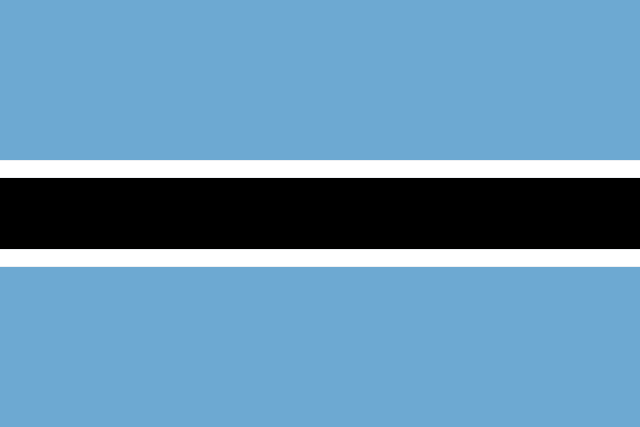
Adopted on September 30, 1966, the flag of Botswana features a light blue field with a black horizontal stripe in the center, bordered by two thin white stripes. Light blue represents water and rain, a vital resource in the arid Kalahari symbolized by the national currency and motto 'Pula' (which means rain). The central black stripe and white borders represent the zebra, the national animal of Botswana, and symbolize racial harmony and cooperation between the black majority and white minority populations, intentionally contrasting with the apartheid regime of neighboring South Africa.
3. Path to Freedom & Sovereignty
Unlike many African colonies, Botswana achieved independence from the United Kingdom peacefully. Under the leadership of Seretse Khama, the founder of the Botswana Democratic Party (BDP), the country drafted a constitution and held democratic elections. On September 30, 1966, the Bechuanaland Protectorate officially became the independent Republic of Botswana, with Seretse Khama elected as its first President. The country established a stable parliamentary democracy, avoiding the civil wars and military dictatorship cycles that affected other post-colonial African states.
Key Historical Milestones
Great Britain establishes the Bechuanaland Protectorate to protect Tswana territories.
Botswana gains full independence from the United Kingdom, with Seretse Khama as president.
Vast diamond deposits are discovered at Orapa, transforming the national economy.
Botswana launches one of Africa's most successful antiretroviral treatment programs to combat HIV/AIDS.
4. Modern Geopolitical Challenges
Despite being one of Africa's most stable and prosperous economies, Botswana faces challenges. The economy is heavily dependent on diamond exports, which generate the majority of government revenues, leaving it vulnerable to changes in global diamond demand. Additionally, Botswana has one of the world's highest HIV/AIDS prevalence rates, placing a major strain on its healthcare system. Environmentally, the country struggles with severe water scarcity, recurring droughts, and the threats of climate change affecting its wildlife and rural agricultural populations.
Frequently Asked Questions
What is the meaning of the word 'Pula' in Botswana?
Pula is the national currency, the national motto, and the word for 'rain' or 'blessing', highlighting the value of water in the Kalahari.
How did Botswana avoid post-colonial conflicts?
Botswana maintained democratic institutions, utilized diamond revenues to invest in education/infrastructure, and promoted racial harmony.
Think You Can Pin Botswana on the Map?
Use the landscape and flag clues you just learned to spot this country in our free Street View guessing game.
Play LostStreet Guessing Game