
1. Geographical & Map Formation
Bulgaria is situated in the eastern Balkan Peninsula, bordering the Black Sea to the east. Evolving from the medieval Bulgarian Empires, which dominated the Balkans, the country's modern borders were shaped by the collapse of the Ottoman Empire. Following the Russo-Turkish War of 1877-1878, the Treaty of Berlin (1878) created an autonomous Bulgarian principality but restricted its borders, excluding Macedonia and Eastern Rumelia. Eastern Rumelia was unified with Bulgaria in 1885, and subsequent border changes occurred following the Balkan Wars and World War I, establishing the modern map bordering five nations, including Albania (via near-Balkan regions).
2. Heraldry & Flag Symbolism
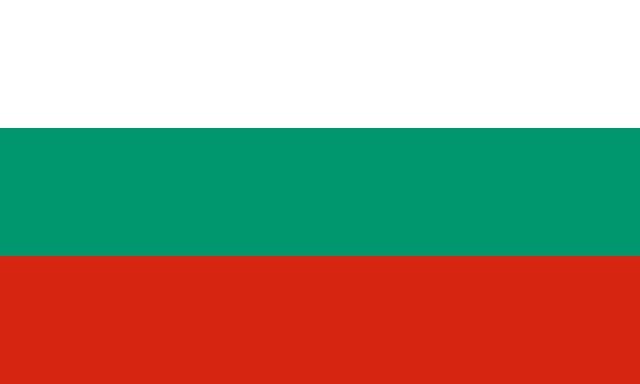
The national flag of Bulgaria is a horizontal tricolor of white, green, and red. White represents peace, love, and freedom; green symbolizes the agriculture, lush forests, and fertility of the land; and red represents the blood shed by national heroes during the struggle for independence. The flag was originally adopted in 1879 by the Tarnovo Constitution following the country's liberation from Ottoman rule. It was modified during the communist era (1947-1990) to include the state emblem, before being restored to its original design in 1990.
3. Path to Freedom & Sovereignty
Bulgaria was under Ottoman rule for nearly five centuries (1396-1878), during which its cultural and religious institutions were restricted. The national revival in the 19th century led to the April Uprising of 1876, which was suppressed by Ottoman forces. The resulting international outcry led to the Russo-Turkish War, which liberated Bulgaria. On October 5, 1908, Bulgaria officially declared its full independence from the Ottoman Empire, upgrading its status from an autonomous principality to an independent kingdom under Tsar Ferdinand I.
Key Historical Milestones
The First Bulgarian Empire is established, recognized by the Byzantine Empire.
The Ottoman Empire conquers Bulgaria, initiating nearly five centuries of Ottoman rule.
The Treaty of San Stefano and Treaty of Berlin establish an autonomous Bulgarian principality.
Bulgaria declares full independence from the Ottoman Empire on October 5.
Bulgaria officially joins the European Union, initiating structural economic reforms.
4. Modern Geopolitical Challenges
Bulgaria faces severe demographic and economic challenges. The country has one of the fastest-declining populations in the world, driven by low birth rates and high emigration of young professionals to Western Europe. Economically, Bulgaria remains the poorest member state of the European Union, struggling with high rates of corruption, organized crime, and political instability, which have led to frequent snap elections and slowed its integration into the Schengen Area and Eurozone.
Frequently Asked Questions
What was the Tarnovo Constitution?
Adopted in 1879, it was Bulgaria's first constitution, established as one of the most progressive and democratic charters in Europe at the time.
Why did Bulgaria change the order of the traditional Slavic colors?
Bulgaria replaced the blue stripe of the Pan-Slavic tricolor with green to represent its agricultural wealth and natural landscape.
Think You Can Pin Bulgaria on the Map?
Use the landscape and flag clues you just learned to spot this country in our free Street View guessing game.
Play LostStreet Guessing Game